
By MARTY LEVINE
Editor’s note: “Lasting Lessons” presents stories from faculty and staff about an educational moment that made the most impact on their lives — as a student or an instructor, inside a classroom or out, here at Pitt or elsewhere, formal or impromptu, between friends or even at a bad moment — something that challenged or changed them. Look for more Lasting Lessons in future editions of the University Times.
Anna L. Marsland, professor of psychology, Dietrich School of Arts & Sciences
When Anna Marsland was a staff nurse in a UK hospital in the 1980s, her unit treated trauma patients, usually after surgery following accidents. Marsland noticed that patients with the same sort of medical problems often ended up in wildly differing conditions during treatment.
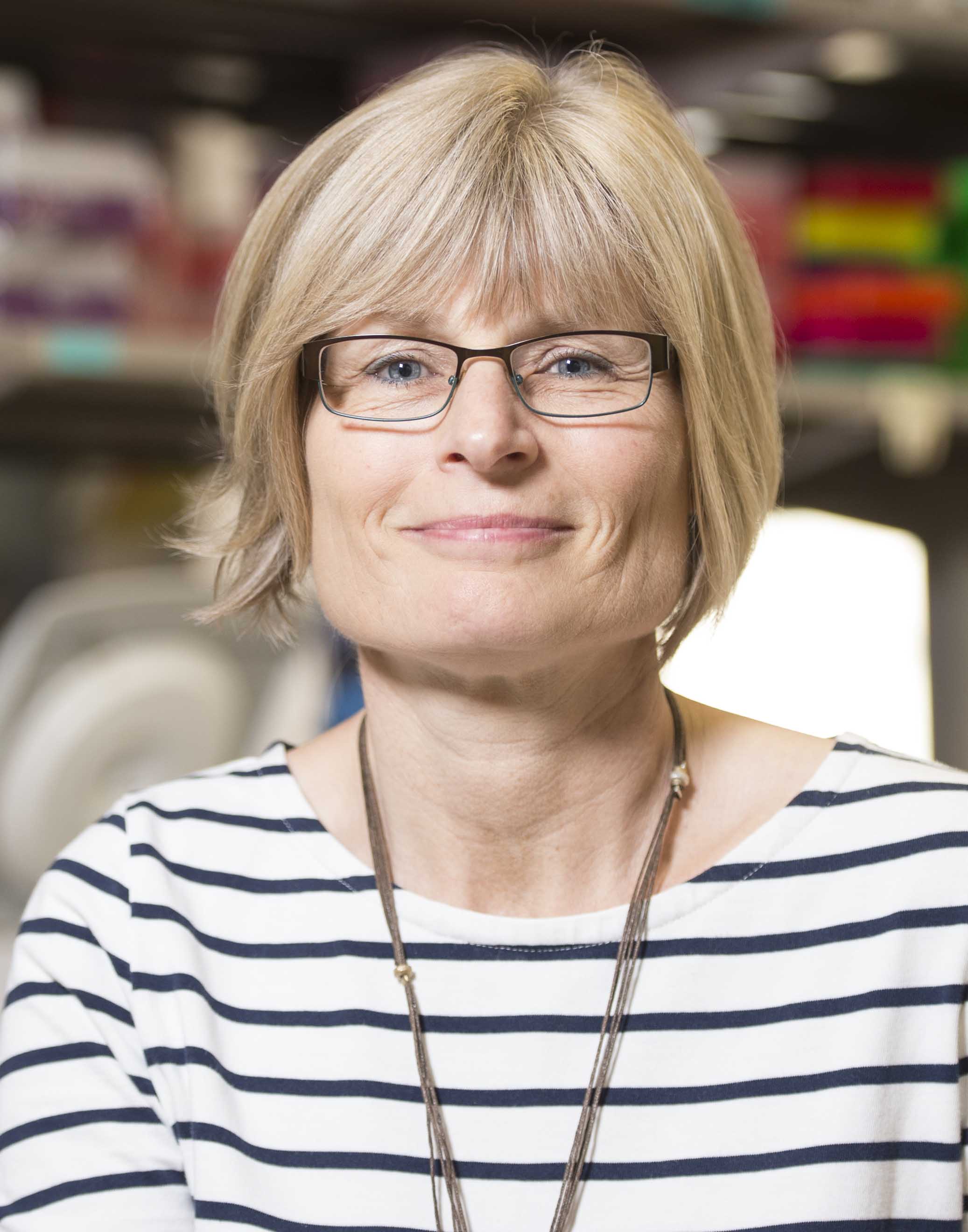 The field of medicine, at the time, was focused solely on medication and medical treatments, she recalled, and not particularly focused on the whole person and the many factors that contribute to health: “People who had the support of family members and close friends and financial resources did better, recovered more quickly, with fewer complications,” she observed. For those without such supports, “it was much more difficult for them to recover,” she said.
“At that time there were social workers in the hospital, but all they did was discharge management,” Marsland said. Aiding patients earlier would have certainly helped — particularly those without social networks, who had more complications post-surgery, developed more infections, took longer to heal and were thus discharged long after others with the same initial injuries had gone home. “Their recovery would seem different,” she said. “I saw that over and over again.
“So I took a pivot,” and entered University College London for an undergraduate degree in psychology. There she discovered the “newly developing field of health psychology. That fueled my passion.”
But in this nascent field, “I was just absolutely frustrated by some of the research going on,” Marsland said. Where was the research dealing with “what I had been seeing when I was treating patients in the hospital?”
That’s when she found Pitt.
“Pitt was really one of the first programs on the map for excellence in health psychology,” she said. Here she got to work with Stephen Manuck, who mentored her throughout her career and retired last year as emeritus distinguished professor of psychology. Marsland earned her PhD with Manuck heading her committee. She has long run her own research program examining biological pathways that link psychological factors to health outcomes.
“There was a lot of skepticism of psychological and social” circumstances affecting biological outcomes when she first began, she said. Now, “the field of health psychology has been instrumental in beginning an affiliated field of behavioral medicine” and “these fields have begun to change medicine.”
One of her early findings in her own research proved that psychological stress impacts the immune system, creating greater risk of infection. This dovetailed with Manuck’s own research showing its effect on the cardiovascular system. And it related to the work of another mentor, Sheldon Cohen in Carnegie Mellon’s psychology department, whose work, before he retired, looked at the impact of stress, mood and social supports on people’s health outcomes — even on how likely they were to develop a cold.
Marsland’s work has shown that “even short-term stressors ... are associated with a change in the immune system.” She has since examined effective aids for high-stress situations: “How can we intervene? What is really effective? Is exercise effective?
“I no longer have to convince people that being stressed is not good for their health,” she noted. “Everyone knows it. To care for people when they are sick we need to engage the full field of health professionals and look after their psychological health.”

Ron Idoko, associate director of the Center on Race and Social Problems, founding director of the Racial Equity Consciousness Institute and research assistant professor in the School of Social Work
From all the ways his time at Pitt has evolved, Ron Idoko says, “my lessons” have been about “committing myself to purpose, being willing to learn from people and learn from opportunities — to see these kind of opportunities extend to me when I wasn’t seeking it. I was met with that moment.”
Before rejoining Pitt — with two University degrees and time on the football team under his belt — Idoko in 2012 was looking for a new career opportunity. At an alumni event, he asked the director of the alumni clubs and council, “What’s your job?” And the answer was, “Just bringing people together to network and have a good time.” It wasn’t long before he heard again from this director: “You know my job that you were interested in? It’s available now.”
“It was an incredible opportunity to act as an ambassador for the University,” Idoko says. “It opened me up to learning to communicate with people across different generations,” and discovering that, depending on the generation, people had had very different experiences at the University, he said. It became his goal “that everyone has a fair and just experience when they come to Pitt.”
Most inspiring to Idoko were participants in the computer center takeover on campus in 1969 by students seeking equity for Black people here. “My engagement with them really sparked my desire to see what equity work looked like for me.”
He joined Equipoise, the Black staff and faculty group, and became its chair. “I really gained a sense that people across all identities wanted the same thing ... to reach their full potential.” And it inspired him to tell Lisa Garland, then new in Human Resources (now director of Talent Acquisition), “I’d like to do the work that you’re doing someday, in forming affinity groups.” A few months later, he said, she did have such an opportunity for
“I’m proud we were able to bring together folks across a lot of shared interests,” he says.
Then in 2020, with the very public killings of so many Black people, including George Floyd, Idoko thought: “We have to get better at supporting our community.” He helped develop anti-racism programs — workshops, town halls and the “What Just Happened” series of public conversations, with online diversity forums that attracted thousands of participants. The idea for the Racial Equity Consciousness Institute was also born.
All of this led to his being asked to join the Center for Race and Social Problems leadership and, most recently, the honors college as director of social innovation. “I’m already doing this, but I want to do that,” he muses. “Can I do both things? Is that OK? It reminded me that there is no set path to the future.”
In the Frederick Honors College, he is helping students develop a platform — a game — that grows civic literacy and civic capacity; a podcast where students can talk about how they have experienced real change; and a student-led catalogue of resources for community members who wish to promote social change.
“There wasn’t a clear road map to doing the work,” he says of all this continuing efforts, but “that was all core to my growth: Being a little brave, being willing to put yourself out there... in environments where people felt as if they couldn’t speak up.
“Especially now, people need to lean into their values,” he adds. “I care about everyone being able to thrive and having their potential.
“A university’s purpose,” after all, he says, “is to share knowledge to do society good.”
Marty Levine is a staff writer for the University Times. Reach him at martyl@pitt.edu or 412-758-4859.
Have a story idea or news to share? Share it with the University Times.
Follow the University Times on Twitter and Facebook.