
By SHANNON O. WELLS
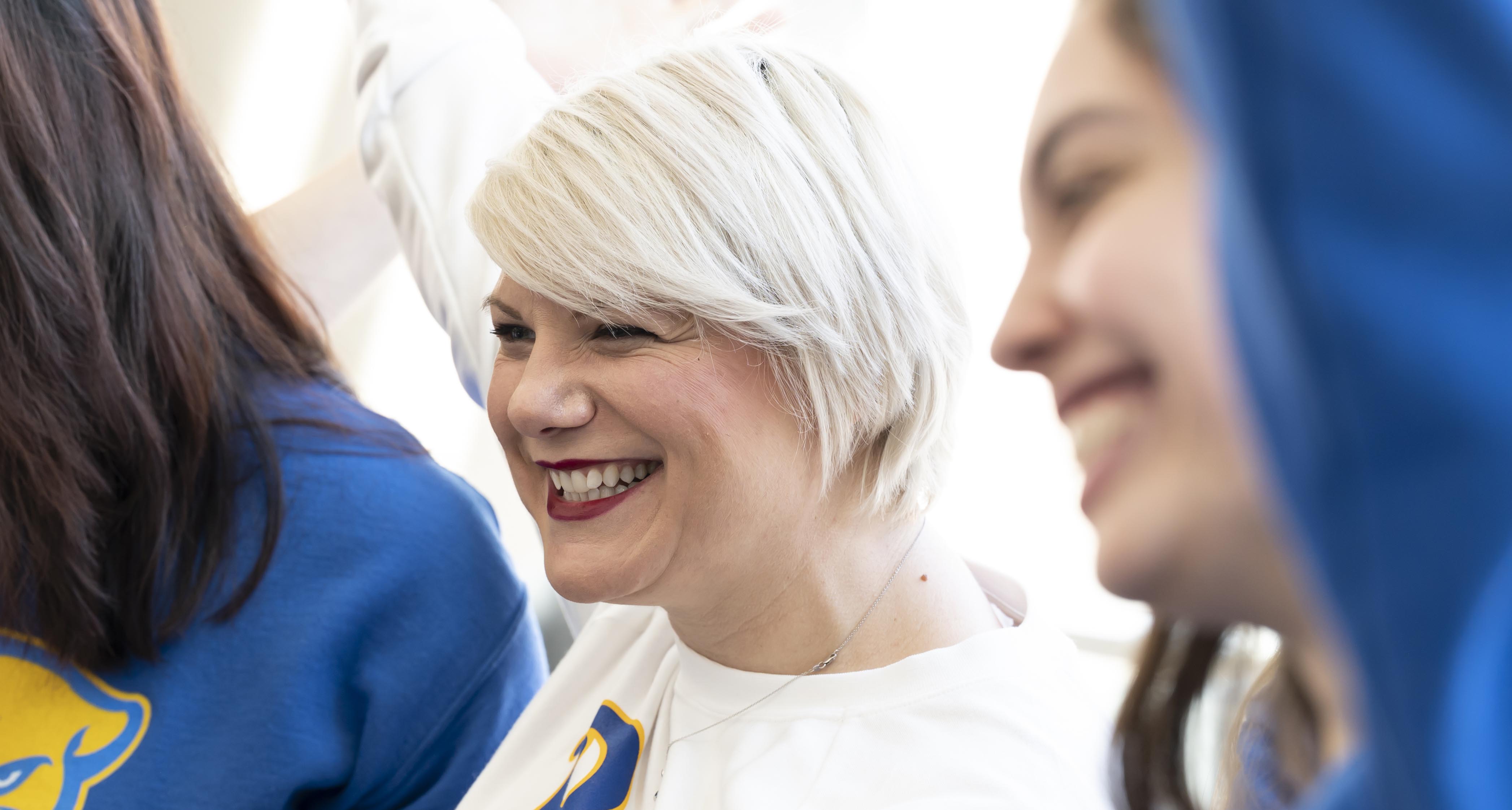
When Carla Panzella officially took on the role of vice provost for Student Affairs in June, she brought the distinct advantage of working closely with her predecessor, Kenyon Bonner, in creating a new vision for Pitt students in the immediate wake of the COVID crisis and resulting lockdown.
“I think it was a unique situation in that when I came on, Kenyon invited me to be thinking about how to reorganize the division, and so he and I did that together,” she said of Bonner, who left in January for a position at the University of Virginia. “And so my input was valued, and I can see it in the outcomes of what we did over the last two or three years prior.
“So really what I get to do is now build upon that.”
Recognizing the coexistence of Pitt’s vast community and the need for engagement with students thrown off track by the interruptions of 2020-21 as well those just starting their college experiences, Panzella, who spoke with the University Times in mid-August, created an apt phrase that encapsulates her immediate goals.
“(Pitt’s) a big place. One of my key components would be to make a big place small,” she said, “and to make it feel small for all of our students, and to kind of connect all of the supports and services and experiences that students have.”
Panzella explained that Pitt students “run the gamut of emotions, perspectives and experiences. … They’re not a monolith. They never will be, and I think that’s part of what we celebrate — that diversity of thought, perspectives, experiences and so on.”
As a department and their leader, she said it’s vitally important to “listen carefully to what the students need as their feelings, perspectives and views evolve, and really provide them with the resources they need at the moment that they need them. And hopefully try to anticipate them ahead of time.”
Panzella had served as acting vice provost for Student Affairs since January 2024. A national search for a replacement — led by Nicola Foote, dean of the Frederick Honors College, and Clyde Wilson Pickett, vice chancellor for equity, diversity and inclusion — launched last November, when Bonner announced he would be leaving.
Meaningful summer
Panzella came to Pitt as dean of students in August 2021 from Salem State University in Salem, Mass., and was named associate vice provost in December 2022. She was integral in implementing a division-wide reorganization for Student Affairs to create departments, programs and services in the spirit of meeting students where they are.
Panzella also served as a liaison to the provost’s office’s data analytics team, leading efforts to collect and analyze qualitative data to provide a holistic understanding of the student experience.
“I believe that Carla’s leadership in this role will continue to be just what is needed for Student Affairs as they continue to build a vibrant, nurturing and inclusive environment for students at Pitt,” Provost Joe McCarthy said in May when he named her to the position, “and as she carries on her strong commitment to championing student engagement in shared governance.”
Lorraine Craven, who joined Pitt in September 2023 as assistant dean for student experience, now serves as interim dean of students.
Panzella described her summer as “definitely busy, but busy with meaningful work. I think that’s a really happy place for me,” she said.
The transition from dean of students has been “seamless in some ways, because we have the benefit of being at the same institution,” she said, describing them as “two different, yet deeply connected roles that have the same philosophy. You’re still looking for the same student outcomes.”
The vice provost of Student Affairs considers the strategic plan, the department’s vision and how its strategic plan aligns with the larger Plan for Pitt, she explained, while the dean is more focused on the “day-to-day student experience, and operationalizing that vision and that plan within the division.”
Tasks this fall in Panzella’s department will include launching a search for a permanent dean of students.
“So that’s some of the work that we’re doing,” she said.
Safe place in difficult times
Following a spring semester that saw several pro-Palestinian demonstrations on campus, and anticipating a fall term that includes a likely contentious presidential campaign and November election, some of the current work is based on accommodating students’ needs, rights and safety concerns for the academic year.
“We’re preparing for our students to be engaged, very actively engaged this fall,” she said. “Some of the ways that we’re preparing it (include creating) messaging for Welcome Week, for our first-year students,” she said.
Student Affairs has worked with other University leadership on a website that helps corral all the resources and support into one place — freespeech.pitt.edu — to help people navigate all the issues more easily.
“We have different messages and videos for students, and in modalities that I think will resonate with students,” she added, including programming and speakers to connect topics to students’ own identities and “their own ways of thinking about some of these topics as they develop who they want to be.”
Student Affairs will provide student leadership training, support for students and “help them find places (where) they can feel safe on campus during difficult times,” she said.
Admitting there could be interesting post-peak COVID challenges coming up, Panzella stressed that Student Affairs and the larger Pitt community offers numerous opportunities to help students of color, transgender students and “all students and all identities feel welcome and like they belong.”
“There’s a lot of conversations outside of the election and other issues,” she added, which include issues concerning off-campus graduate and professional students. “We’re creating services and supports for them.
“What we’re looking at is keeping our eye on all students, and how do we continue to make this big place small for them, in their own identities, their own places?”
Staying connected
Describing her undergraduate years at Saint Peter’s University in Jersey City, N.J., as a “first-gen, low-income student,” Panzella said she reflects often on her own student experience while engaging in her professional academic roles.
“That’s who I was, and it has undeniably informed how I do student development throughout my entire career. There’s no doubt about it,” she said. “I also measure that reflection to say that was just one person’s experience. And I certainly have some characteristics of other low-income, first-gen students.
“But I think if you open that lens a little further and you just continue to look at that, you will see that there are other experiences to be considered,” she added.
With more than 20 years of professional experience behind her, Panzella said while she’s evolved from a leadership perspective, “you absolutely stay connected to students. I think that is a key component of being a leader of a division like Student Affairs.
“I think it’s really important for leaders of Student Affairs to stay connected to the student experience and not feel like it’s so far off from where you are,” she added. “Yeah, the topics change. But quite frankly, student development is student development.”
So what would be the pep talk Panzella would offer incoming Pitt students, given this fall’s rather unique prevailing circumstances?
“I think fall ’24 is sort of this quintessential college moment, where students are going to have opportunities,” she said. “It’s post COVID, so they’re fully engaged, they’re in person … they’re present and in class, and they have this amazing opportunity during a time where there’s a lot going on in the world, in the country, to figure out who they want to be.”
Shannon O. Wells is a writer for the University Times. Reach him at shannonw@pitt.edu.
Have a story idea or news to share? Share it with the University Times.