
By SUSAN JONES
When Columbia University graduate and pro-Palestinian activist Mahmoud Khalil — a legal permanent resident in the U.S. — was arrested on March 8, it sent shockwaves through the international academic community.
Since then, several other students and scholars have been targeted by the federal government as part of President Donald Trump’s crackdown on those who participated in protests or spoke out against the Israel-Hamas war.
-
Georgetown fellow Badar Khan Suri, a native of India, was detained by the Department of Homeland Security on March 18 and sent to a detention center in Louisiana. On March 20, a federal judge in Virginia ruled that Suri could not be deported from the United States for now, pending further litigation. The government accused Suri of “spreading Hamas propaganda and promoting antisemitism on social media,” which he denies.
-
Ranjani Srinivasan, 37, an Indian national and Fulbright Scholarship recipient at Columbia University, left the U.S. out of fear she would be taken into custody after immigration authorities showed up her apartment
-
Yunseo Chung, 21, a Columbia student, was involved in pro-Palestinian protests and was advised her legal permanent resident status was revoked on March 10.
-
Momodou Taal, a student visa holder and doctoral candidate at Cornell University, was described as a pro-Palestinian advocate and had his visa revoked this month.
-
Federal immigration agents detained University of Alabama doctoral student Alireza Doroudi, who is a citizen of Iran, according to a report from ABC News. The mechanical engineering student is currently being held in a detention facility, but ICE records do not list where.
-
Turkish national Rumeysa Ozturk, 30, was arrested on March 25 near Tufts University’s Somerville campus in Massachusetts, where she was a Ph.D. student on a valid F-1 visa. She was detained by masked officers and her visa revoked, but no reason was given. Last year, she co-wrote an op-ed in the school’s newspaper in which she criticized Tufts’ response to a call for the university to divest from companies with ties to Israel because of the conflict in Gaza. The day after her arrest was caught on camera, hundreds protested Ozturk’s detention at a park on the edge of the Tufts’ campus.
On March 27, Secretary of State Marco Rubio told reporters that the State Department under his direction had revoked the visas of possibly more than 300 people and was continuing to revoke visas daily of people who undertake activities “counter to the national interest or foreign policy of the U.S. government” or the person is involved in criminal activity.
“My standard — If we knew this information about them before we gave them a visa, would we have allowed them in?” Rubio said. “And if the answer is no, then we revoke the visa.”
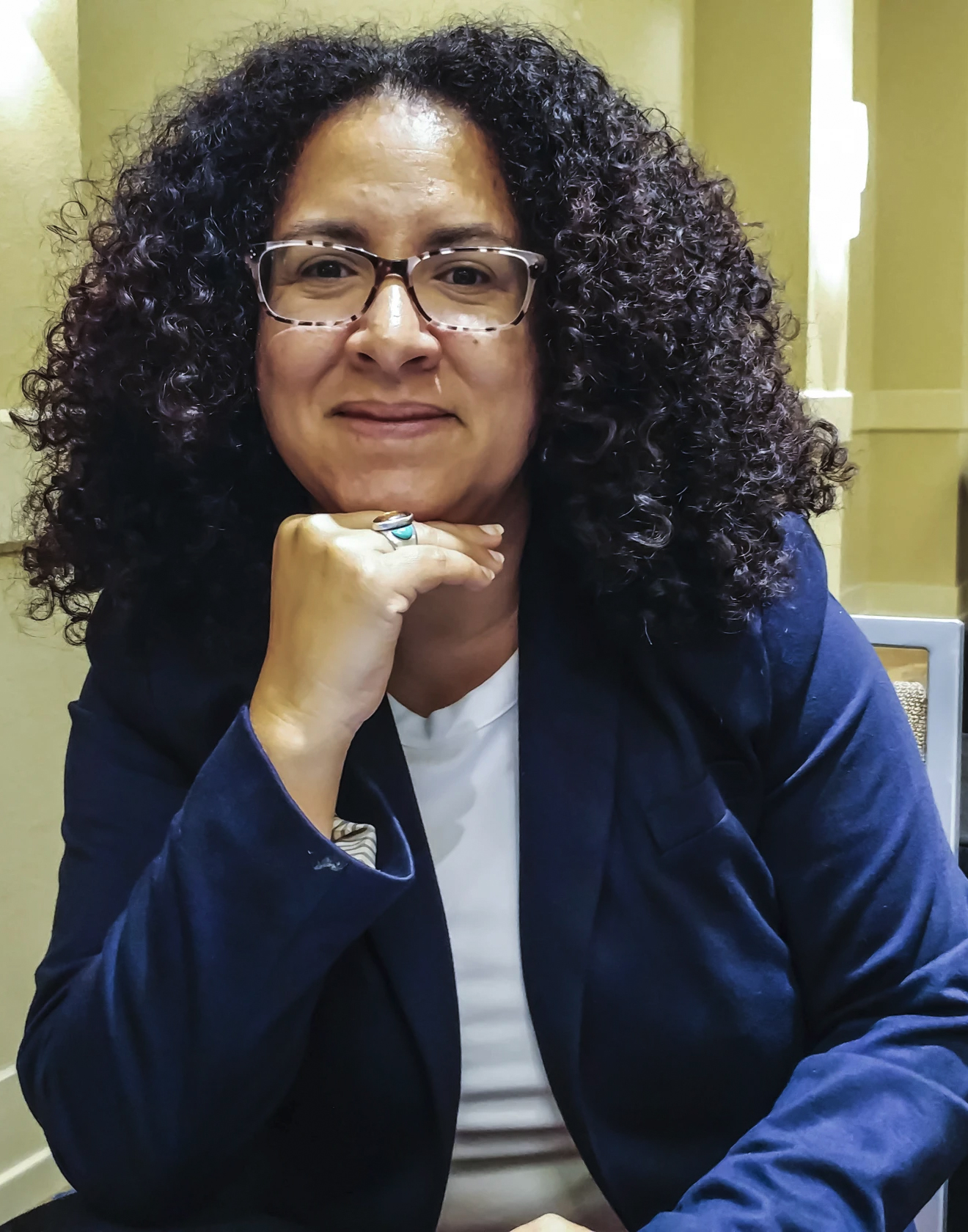 “From my perspective, it’s trying to impose a chilling effect on students that are engaging in protests across campus,” said Sheila Vélez Martínez, professor of refugee, asylum and immigration law and director of Pitt Law’s Immigration Law Clinic. “This is concerning to me, because campuses have always been spaces of discussion of ideas. The administration is not being consistent with its claim that they want higher education institutions to be spaces of open and frank debate for a myriad of ideas to be discussed. … It’s also concerning, because they are trying to equate opposition to the policies that the state of Israel follows with terrorist activities.”
In a fact sheet about Trump’s executive order on “Additional Measures to Combat Anti-Semitism,” the president said: “To all the resident aliens who joined in the pro-jihadist protests, we put you on notice: come 2025, we will find you, and we will deport you. I will also quickly cancel the student visas of all Hamas sympathizers on college campuses, which have been infested with radicalism like never before.”
“I think that the most salient thing, really, is that people are afraid,” Vélez Martínez said. “They need to understand this is a rapidly evolving policy landscape. People are not sure what it means for them. So that’s my lawyer concern. My human concern is about how people are just not sleeping at night. And considering, does this affect me? Can I go to a protest? … What happens if I go to a lecture that is about Palestine, does that affect me? Am I at risk if I do that?”
Vélez Martínez said in 25 years as an immigration attorney she’s never seen actions taken against legal permanent residents like those used against Khalil, who was a prominent figure in last year’s protests at Columbia serving as a negotiator between the protesters and university.
“Legal permanent residents have rights to due process,” she said. That doesn’t mean they can’t be deported, but unless they’ve been convicted of a serious crime, they have the opportunity to challenge their detention and appear before an immigration judge to fight their removal.
Khalil has not been charged with committing any crime. On April 1, the judge presiding over a lawsuit in New Jersey challenging Khalil’s detention denied the government’s motion to dismiss his petition and said he has jurisdiction over the case, according to NBC News. Khalil is being held in Louisiana, where the government wanted the case heard.
For international students and scholars at Pitt, Vélez Martínez said the Office of International Services “has been very proactive in being in constant communication with the international community. I know that is not the case with all schools.”
If there are issues that are beyond the scope of the Office of International Services, Vélez Martínez said the Immigration Law Clinic she heads has agreed to have certain hours when law student are manning the phones and taking questions from the Pitt community.
“In my more administrative hat and institutional hat, what I’m concerned is that we are generating a climate in the country, not at Pitt, but in the country, that is not conducive to inviting international scholars,” she said. “And international scholars are so important, so valuable, certainly for the work that we do and my academic work, but for the institution writ large, in science and literature? That is the thing that keeps me up at night. Are we going to be able to continue to have this vibrant intellectual international community at Pitt?”
Susan Jones is editor of the University Times. Reach her at suejones@pitt.edu or 724-244-4042.
Have a story idea or news to share? Share it with the University Times.