
By SUSAN JONES
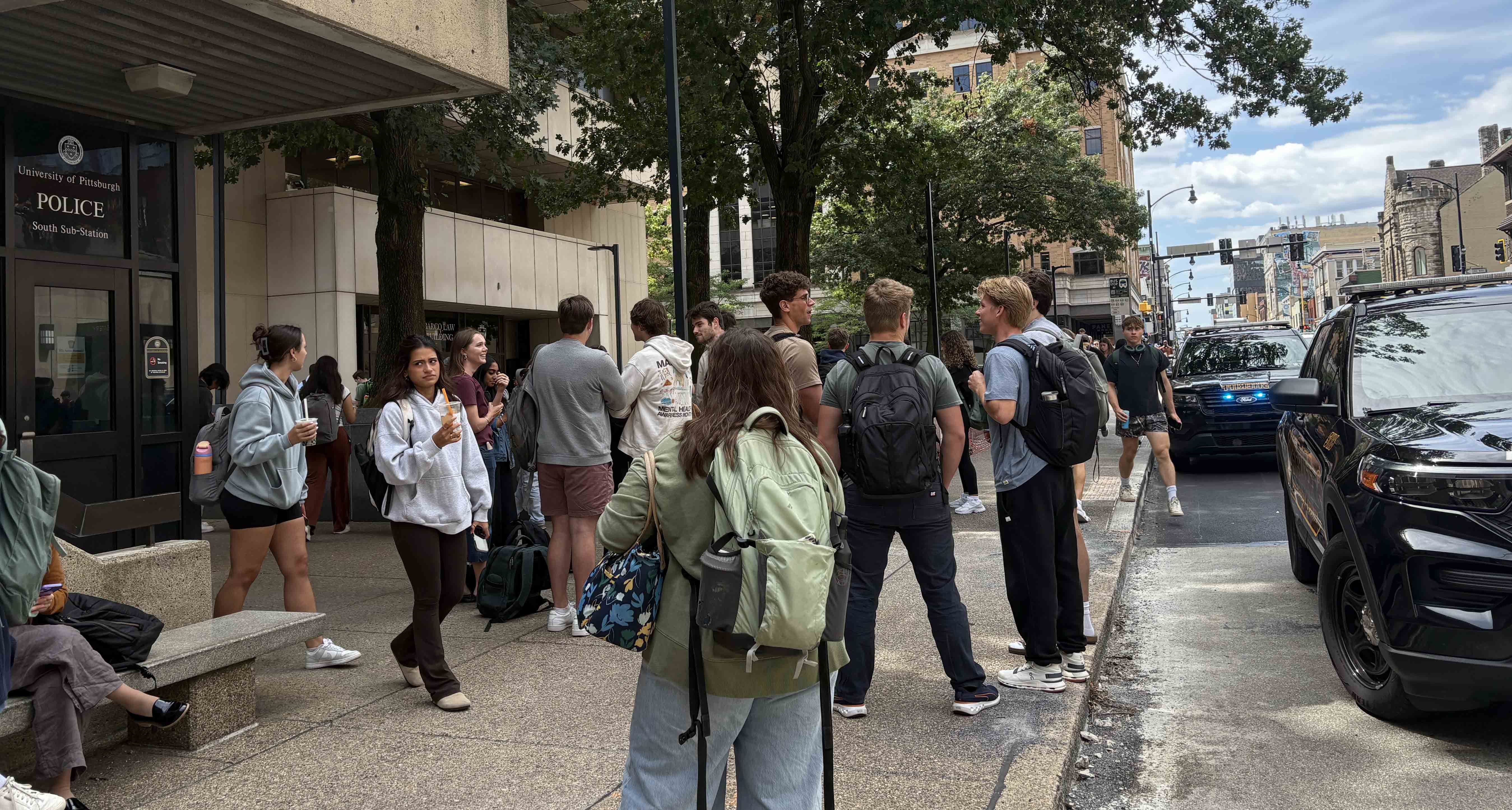
A hoax call of an active shooter at Pitt’s Barco Law Building last week was among a string of similar incidents at universities throughout the country.
The “swatting” incidents began on Aug. 21 at Villanova University and the University of Tennessee at Chattanooga. Since then, similar hoax calls reporting active shooters have occurred at West Virginia University, University of Arkansas, Northern Arizona University, Iowa State, Kansas State, University of Colorado-Boulder, University of New Hampshire, University of Kentucky, Central Georgia Technical College and the University of Maryland.
A report issued by the Center for Internet Security and the Institute for Strategic Dialogue on Aug. 27 — the day before the Pitt incident — said that member(s) of the “Purgatory” swatting group “very likely made false emergency reports targeting at least 10 U.S. universities between August 21 and 25.” The report went on to say that all 10 calls were conducted using Google Voice services and featured gunshot sounds.
During the Aug. 28 incident at the law school, Pitt Police and city of Pittsburgh police responded to reports of “a possible armed individual near the Barco Law Building that was determined to be unfounded,” a Pitt spokesman said.
Pitt Public Safety sent out an emergency alert to the Pitt community at 12:28 p.m. — approximately 8 minutes after the first report came in to Pittsburgh police. The text message said that police were on the scene for “an unconfirmed report of an armed person. Avoid the area.” An ENS update was sent at 12:34 p.m. that police were continuing to search the area. Then at 12:49 p.m., a final alert said the building had been cleared and there was no credible threat.
A Pitt spokesman said: “The University takes all threats to our campus community seriously and seeks to quickly determine the credibility of these reported instances. On (Aug. 28), officers arrived on scene quickly and confirmed that there was no threat to public safety.”
The ENS alerts sent to the Pitt community on Aug. 28 were in sharp contrast to the response after another hoax active shooter incident on April 10, 2023, at Hillman Library. During that event, the first call about a possible active shooter at the library came in to Pittsburgh Police at 11:10 p.m., followed quickly by a second and third call from different phone numbers. Pitt Police were on scene almost immediately, but it was 82 minutes before the first emergency notification went out to the Pitt community.
After the Hillman hoax, Pitt's Office of Public Safety and Emergency Management made several updates both to its emergency alert protocols and systems and to communication; availability of campus-wide education and training for students, faculty and staff; and enhancements to physical security. Panic alarms were installed in all classrooms, and all classroom doors now have locks, either mechanical or electronic that can be operated remotely by Public Safety officials.
Part of the education process has been making sure the entire Pitt community is taking the following steps to stay in the loop in case of an emergency:
1. Make sure your notification preferences are up to date at https://www.safety.pitt.edu/subscribe-alerts
2. Follow Pitt Police on social media for real-time updates (X: @PittPolice; Instagram: @Pitt_Police; and Facebook)
3. Bookmark safety.pitt.edu where emergency alerts are posted using a bright gold banner.
4. If you receive an ENS alert, please spread the message with others around you.
For additional information about ENS messaging and troubleshooting, visit Pitt Digital to review their updated FAQs.
Some people received another ENS alert later in the day on Aug. 28 in error. The public safety office said that “After consulting with our partners at Pitt Digital and RAVE Guardian, it was determined that a carrier issue impacted a small portion of our subscribers.”
Susan Jones is editor of the University Times. Reach her at suejones@pitt.edu or 724-244-4042.
Have a story idea or news to share? Share it with the University Times.