
By SHANNON O. WELLS
With more than 23 years of law enforcement experience, including key leadership positions at the Federal Bureau of Investigation’s Pittsburgh bureau and six years as a police officer in Fairfax, Va., Scott Argiro has devoted his professional life to preparing for — and sometimes experiencing — alarming situations that often involve human beings at their worst behavior.
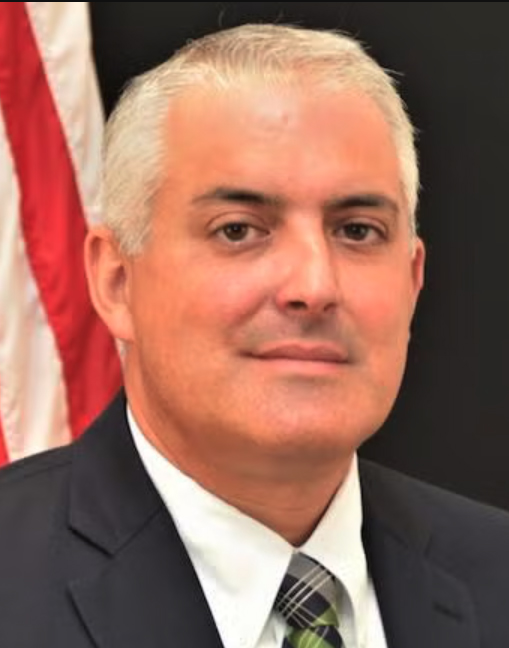 All those years of handling worst-case scenarios, however, haven’t diminished his belief that even the most trying situation can provide an opportunity for learning, understanding and a positive outcome.
Participating in planning and preparation for Pitt graduation ceremonies last spring, Argiro, who started in 2023 as the University’s assistant vice chancellor in the Office of Public Safety and Emergency Management, had a moving — and personalized — realization that this particular annual ceremony meant a little more than usual.
“I went home and told my wife, I said, ‘Those kids deserve that. They didn’t have a high school graduation, they didn’t have a prom,’ ” he said, reflecting on their COVID lockdown experiences of 2020. “Because I had a (daughter) last year that graduated from the University of Dayton, and she quickly reminded me that she wasn’t able to experience some of those things.”
At Pitt, he added, although there was some significant protests and some unrest on campus during commencement week, “but we were able to pull it off, and it took a lot of coordination.”
Argiro was invited to share his experiences at the Student Admissions, Aid and Affairs Committee’s first meeting of the 2024-25 academic year on Sept. 13.
In his role leading Pitt’s Department of Integrated Security, including oversight of security systems and protocols, threat assessments, and security team management across all Pitt campuses, Argiro works closely with local law enforcement agencies and partners, including the city of Pittsburgh police and fire bureaus, to support campus safety needs.
He also assists Ted Fritz, vice chancellor for public safety and emergency management, in leading safety initiatives and safety performance metrics, aligned with the University’s mission and strategic objectives.
Argiro describes Pitt’s Integrated Security as a “very small department. I have 14 employees here,” he said. “Three of us are administrative. I have 11 technicians … all over the campus. We’re in 111 sites.”
Buttons and cameras
A key, campus-wide element to help the Pitt community is the “panic buttons” that have been installed throughout the past year or so.
“They are put in the classroom to afford you an immediate response,” he said. “It could be a critical incident involving an active shooter. Let’s hope that never happens. It could be a distraught student who’s angry or what have you that requires a police response that can be activated as a panic button. It could be a medical emergency. It can call the police immediately.
“If you also have the opportunity to call 624-2121 and provide additional information, that would be the most effective way of using the panic button,” he added, “especially if it’s a medical emergency, because that way we can know to get emergency medical services started as well.”
Public camera systems are another invaluable tool in keeping the Pitt campus safe.
“Camera systems are a necessary tool in today’s society,” he said. “It’s a reactive matter, but almost every crime that occurs on this campus, the police department is able to really generate some significant leads, especially if it’s in some of the higher populated areas where we have camera coverage, and they’ve been very successful in solving crimes just based on the camera coverage.”
As effective as tools and technology can be in promoting public safety, planning, foresight and human ingenuity still play a significant role. Threat assessment is a key element of Pitt Emergency Management’s mission statement.
“It’s something we take very seriously here,” Argiro said, noting that every university and college is required by the Department of Education to have a “formulated, structured” threat assessment team. “Ted (Fritz) started this a few years ago and has handed it down to me.”
Assessing threats
As a threat coordinator at the FBI, Argiro knew his way around threat assessment, handling mental health threats, active federal threats and local criminal threats where he and his colleagues had to work with local partners. “So I really hit the ground running when I came here to the University and encountered some of these threats.”
Threats can involve anything. “If you can imagine … somebody saying something in a threatening nature, somebody thinks they overhear somebody saying in threatening nature, or to a student who’s threatened faculty and staff over a period of years.”
Working with one of those recently involved coordination among departments including the registrar’s office, student affairs, student conduct, who “all come together and decide, what is the best course of action?”
The department’s main focus of protecting students, staff, faculty and vistors “under all circumstances” requires what Argiro called a “very multidisciplinary, robust team that has specialties (involving) all corners of the University, representing all interests.”
The coordination among himself, Fritz, police department investigators, Student Affairs, University Counseling, and Human Resources allows a reliance on “every different entity to provide their expertise and their guidance.”
“I didn’t have that luxury when I was with the FBI,” he said. “You see a rash of school threats here now and then. Generally, those are initiated by juveniles, and the federal system is not designed to prosecute juveniles, so you have to work closely with your local and state partners. Sometimes they’re limited at what they can do. So then you have this threat, and you’re trying to mitigate it, and you’re kind of stuck with what can you do with it.”
At Pitt, Argiro has “all these resources” at his disposal. If it’s a criminal matter, the police department will work with the district attorney’s office, and they can make an arrest, or they can make a referral to the district attorney’s office, and they can ban the person from campus.
“If it’s a less serious matter and someone just made a mistake, we make a student-conduct referral if it’s a student, and that person can get the proper guidance,” he said.
That his role is at a university campus, one with counseling and various mental health resources available, means in most cases helping students takes precedence over highly punitive outcomes.
“We’re not crushing them. We’re not ruining careers or lives here,” he said. “We’re giving people a second chance, so we keep all that in mind. Especially a counseling factor, if someone is having a hard time adjusting, maybe they’ve made some mistakes, said some things they didn’t mean, … we have to understand, is there a capability to carry that out? If there’s intent and then they have access to weapons, we have to look at that as a potential criminal matter.
“If it’s someone who’s just making remarks and so forth, it could be a counseling matter,” he added. “Maybe that’s some person who just needs some help adjusting. So those are the efforts that we put forth when we convene the threat assessment team.”
See something, do something
Argiro stressed the importance of the community and the public in recognizing potential threats.
“We have to entrust, and we have to empower all those out there that know their surroundings, that know who they’re interacting with,” he said, encouraging everyone to engage with your surroundings and those around you. “I’m talking about in your daily nine-to-five, but also outside. If it’s family members, if it’s associates, you’re seeing a change of behavior, you have to be in tune with that.
“You have to be willing to interject and say something,” he added, “whether it’s a referral or whether it’s a call to a police department or whatever.”
A key term in this area is “leakage,” or someone sharing information about a potential threat or crime before it happens. Argiro said this occurs in “over 90% of the critical incidents,” including school shootings and mass shootings.
“Somebody has told something to somebody about their intent or their intentions, and even if it’s just explaining the grievance — you know, they were fired unjustly, and they’re ‘going to pay’ and this and that — those all can amount to something,” he said. “So when people say something, we need to pay attention to it and put the clues together.”
It boils down to a combination of taking opportunities and trusting your judgment. “When the hair on the back of your neck stands up, and you think that something’s not right,” he said, “it probably isn’t.”
Shannon O. Wells is a writer for the University Times. Reach him at shannonw@pitt.edu.
Have a story idea or news to share? Share it with the University Times.