
By SUSAN JONES
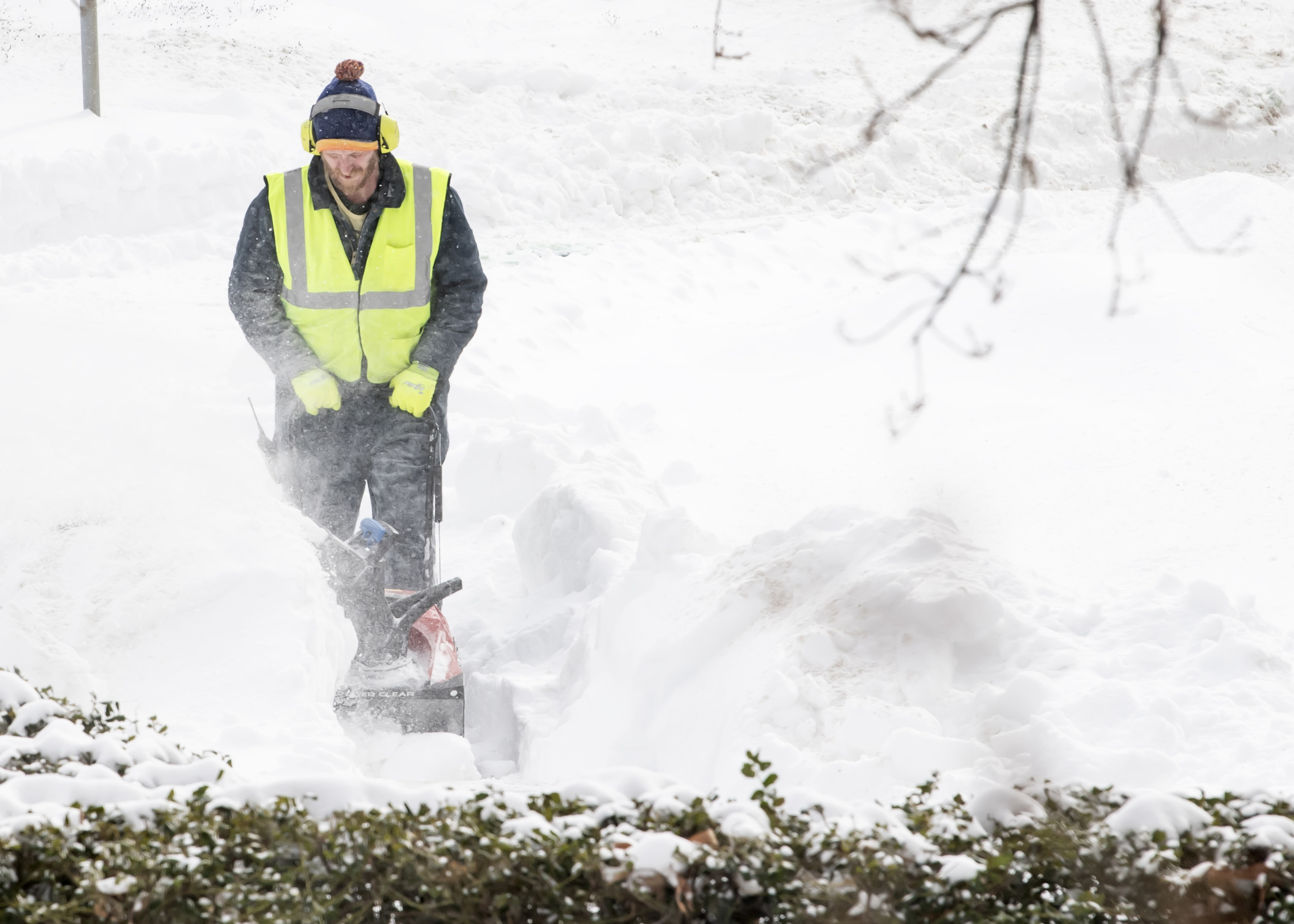
Pitt’s grounds crews, custodians and other skilled laborers “did a week’s worth of work in probably two and a half days,” during the snowstorm that hit Jan. 25 and 26, Andy Moran, senior manager of grounds in the Office of Facilities Management, said.
While other faculty and staff were being told to stay home, these workers, along with Pitt Police, Chartwells dining team members, building engineers, security personnel and more, were hard at work “conducting operationally essential activities,” as Provost Joe McCarthy and Dwayne Pinkney, executive senior vice chancellor for administration and finance, noted in their messages to the Pitt community earlier this week.
“All of our service teams are essential personnel at the University of Pittsburgh,” said Will Mitchell, director of facilities services. “So everybody from our skilled trades to our engineering team to our custodians and groundskeepers, we are all considered essential personnel to help manage the operations of the University.”
Planning for the storm, which ended up being the largest in Pittsburgh since 2010 and set records for the day on Sunday, started about a week before the first flake fell. Pittsburgh eventually had between 10 and 12 inches of snow before the storm ended early Monday.
The Pitt Emergency Operations Center started evaluating National Weather Service reports early last week and provided relevant planning and updates to University leadership.
Because the forecast varied widely on how much snow the area was going to get, Moran said they had to prepare for the worst.
“We made sure our salt supplies were stocked up. We got extra deliveries in. We actually over-stocked our salt supplies,” he said. “We pulled out equipment that we haven’t used for a couple years, because we haven’t had these larger storms. In total, we had about 55 mechanical pieces of equipment ready to battle the storm — that goes from trucks to snow blowers to skid loaders and backhoes.
“We also readied the teams. … We had a pre-storm meeting with all the crew. … We gave them opportunity to voice any questions they had. A lot of my crew are newer and younger, and we haven’t had a snowstorm like this since 2010. Anybody hired in the last 15 years really had not experienced a larger snowfall on campus. You don’t know the amount of work until you actually have experienced one.”
“Preparation is the strongest advocate that we can deploy to make sure that we are prepared for these types of events, knowing that they’re fluid, because weather is something that could change by the hour,” Mitchell said.
By Thursday, Jan. 22, Moran said they were “100% ready for the storm.”
 The teams started coming to campus around 4 a.m. Sunday. About 14 of the groundskeepers stayed overnight in Pitt housing not currently being used by students and others made arrangements to stay nearby so they were sure to make it into work.
Mitchell and Moran said the drive in Sunday morning wasn’t too bad because the brunt of the storm hadn’t hit yet, and “there was nobody on the Parkway,” Mitchell said.
Snow removal work started at 5 a.m. Sunday, so they could “just get a jump on the few inches that fell and then be prepared for what was coming the rest of the day,” Moran said. They worked throughout the day until 9 or 10 p.m. Then on Monday, the crews were back out at 4 a.m.
The roughly 28 groundskeepers were joined by 11 people in Pitt’s skilled labor team and 60 to 80 custodians, who worked as available around the clock.
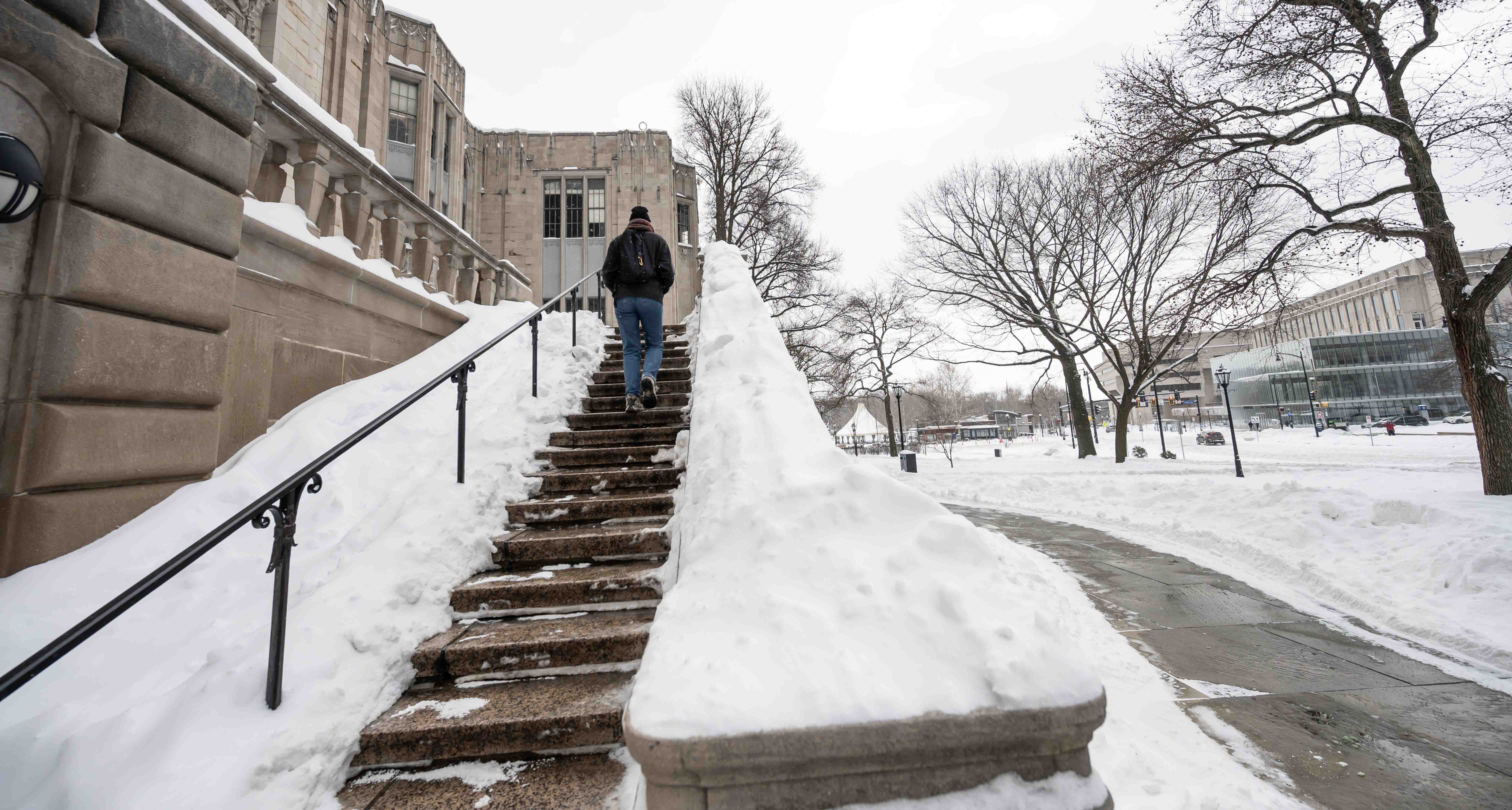
The crews are responsible for clearing 32 miles of sidewalks and 2,000 steps, Moran said, as well as several parking lots and loading docks.
“The initial attack was to just plow and shovel during the day on Sunday,” he said. “The snow rate that was falling, salt was not going to be effective. It was too cold, and there was just too much snow falling per hour. So Sunday was just more of a remove the fallen snow as much as we could. The crews just made continual passes throughout their zones.”
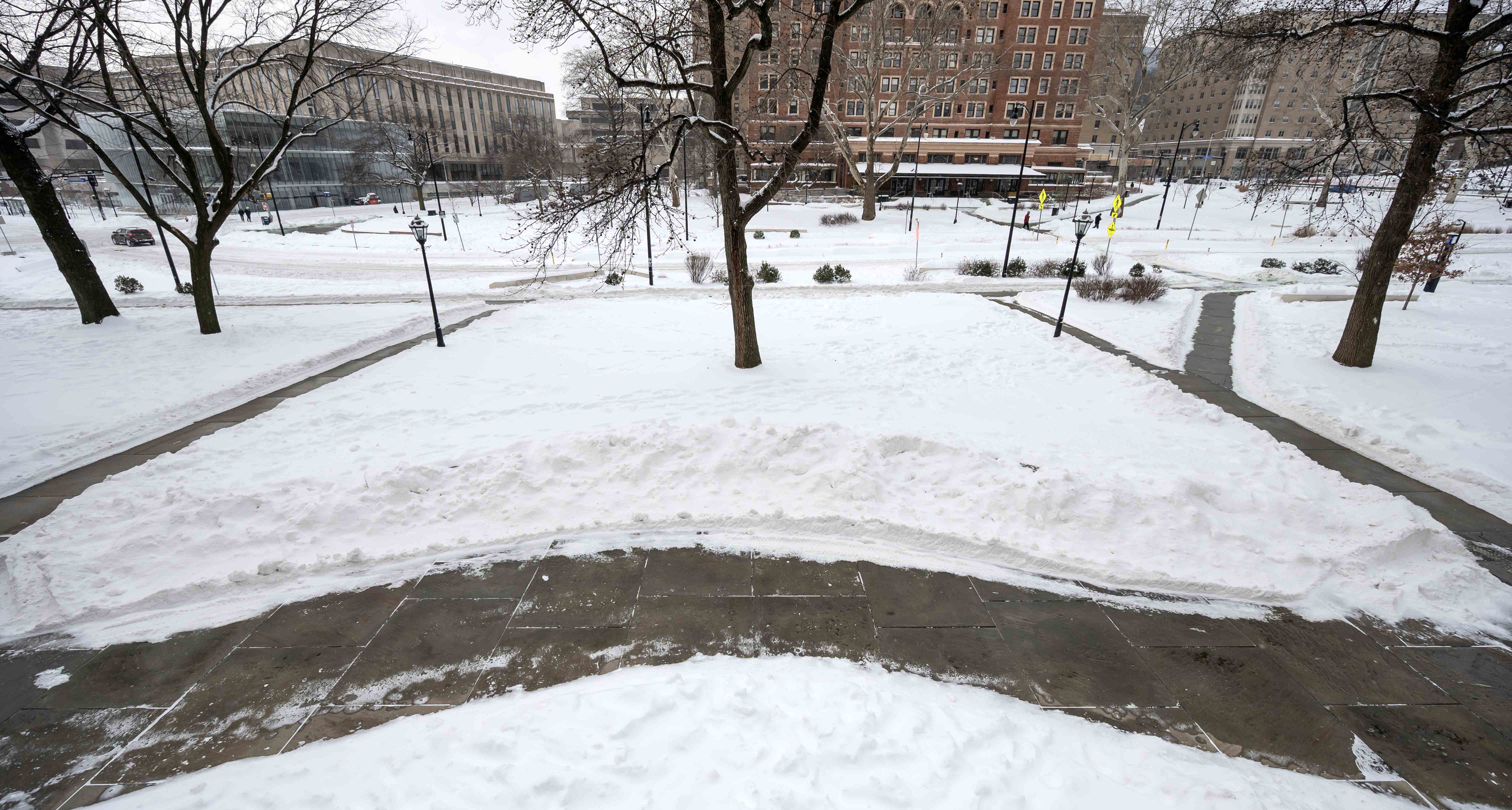
Then on Monday, the main tasks were to clear ramps and steps, and to put salt down to maintain what had already been cleared. Tuesday, a big focus was to really fine tune what was cleared to allow safe passage for students, faculty and staff. That included widening some of the pathways and using larger equipment to open up crosswalks to allow people to gather at the lights and safely get across the streets, in anticipation of in-person classes resuming on Wednesday.
In addition, the systems engineers “were working on all shifts, 24/7, to make sure that we were combating any freezes or other (things) that may occur in the buildings (both housing and academic),” Mitchell said.
“The good thing is that because we had so many additional engineers working off-shift and off-hours, we were able to prevent a lot of potential issues that could have occurred on campus,” he said. “Overall, … our storm impact was very minimal from an infrastructure perspective.”
One particular challenge was the Pitt Sports Dome, the 80-feet-tall inflated structure that opened in 2017.
“We spent many, many man hours up there because of the weight of the snow,” Moran said. “As you know, it’s not a structurally supported structure, and so we actually did have to get into our emergency snow removal plans. That includes pulling a rope across the top of the dome to act like a cheese cutter, to slice the snow off,” to make sure the extra weight doesn’t collapse the dome.
“We did have to do that twice in one day, which is the first time we ever had to do that,” he said. Before they could remove the snow, heavy equipment had to plow around the dome to get access to the devices that are used to clear the roof. Moran said the Energy Management Operations Center increased the pressure in the dome to make it more rigid.
The Energy Management Operations Center also is able to monitor building systems remotely, and “then we have our boots on the ground that go in and address issues as they arise,” Mitchell said. “We’ve got well over a million points of data that are fed directly to that group on a routine basis, daily, that help us understand the conditions of the buildings, the climate within the buildings, and our centralized systems.”
This helps make sure the continuing bitter cold temperatures are not impacting Pitt’s buildings. Engineers also regularly tour buildings, making sure that any mechanical malfunctions are dealt with immediately.
As for how the cold impacts team members who are working outside, “we put measures in place to make sure that they’re working safely,” Mitchell said. “They have ample opportunity to take breaks, to make sure they’re staying warm. So just like we would have measures for extreme heat, we have measures that we put in place for extreme cold.”
Before, during and after the storm, the Office of Public Safety’s Environmental Health and Safety has worked with Facilities Management to train frontline workers on prevention of cold weather injuries.
Moran said they will be working this storm into next week. “We’ll be trying to open up and widen things. And of course, we’ll always be on the lookout for ice,” he said. Because the temperatures have remained well below freezing, not much is melting, but the crews will be constantly monitoring sidewalks.
“We still have at least a good six weeks of winter yet, so we’re not going to shut down just yet,” Moran said. In addition to more snow removal, his team will be restocking salt supplies and repairing equipment in case another storm hits
If there are areas that need attention both inside and outside Pitt facilities, people can contact the Work Control Center at 412-624-9512.
“I just want to highlight the collaborative spirit between all of our RCs across the landscape of the campus — from Pitt Police to Business and Auxiliary Services, the provost’s office, the CFO’s office — that were extremely in lockstep, making sure that we are prepared, have the resources to be prepared and have the ability to execute the tasks that we need to maintain the campus,” Mitchell said. “We’re always communicating with one another, and it’s just been a really strong effort to remediate this event.”
Other unsung heroes
In addition to all the work done to maintain Pitt’s buildings and grounds, several other groups of Pitt staff showed up Sunday through Tuesday to keep everything running smoothly:
-
Pitt Police and Integrated Security continued to provide emergency response and prompt service for access control and other issues on campus.
-
The Chartwells dining team was on site to ensure the two main dining halls at Litchfield Towers and Sutherland Hall were open each day to serve students. Forbes Street Market, Sutherland Market and the Just Walk Out location in Towers also were open. Some of the team stayed in hotels near campus to be able to staff the locations.
-
Allied Security pulled together resources to ensure all the residence halls were staffed and secured.
-
Pitt shuttles were operating until service was suspended Sunday afternoon due to conditions. PRT suspended service shortly after. Routes were altered based on individual road conditions to ensure safety.
-
Parking personnel were onsite at the staffed parking lots and garages for daily operations, as well as for the basketball game Tuesday night.
-
Crews also were busy at Pitt’s regional campuses. There were no in-person classes at any of Pitt’s campuses on Monday. The Pitt–Bradford Facebook page voiced the appreciation felt by everyone: “Snow, ice, and cold temps can’t stop our Facilities crew! A massive thank you to the dedicated staff members who work tirelessly to keep walkways, roads, and buildings safe and accessible for everyone at Pitt-Bradford.”
Provost McCarthy and Dwayne Pinkney shared their thanks in a community message Tuesday: “On behalf of the University community, we want to express our sincere appreciation and gratitude for the tireless work that our essential employees are doing around the clock to ensure the continuity of operations on campus.”
Susan Jones is editor of the University Times. Reach her at suejones@pitt.edu or 724-244-4042.
Have a story idea or news to share? Share it with the University Times.
Follow the University Times on Facebook.