
By MARTY LEVINE
“I always think of service as my life,” says Thuy D. Bui, School of Medicine faculty member and one of this year’s Chancellor’s Distinguished Public Service Awardees. “I always think about what I can contribute.”
Although some of her service is overseas, much of it is focused on immigrants and refugees right here in Pittsburgh, beginning in 1997 with her work at the Alma Illery Medical Center in Homewood, which provides medical care for underserved people no matter their income, insurance or lack thereof.
“I have a very global perspective,” says Bui, who joined Pitt in 1999, “thinking about immigrants and refugees ... and how fortunate I was to come here (from Vietnam). There are refugees who stay in camps all their lives.”
Pitt recently recognized her for “an unwavering commitment to social medicine and health justice, specifically for historically marginalized groups, which has led to a distinguished, decades-long career that has been celebrated with many awards for improving lives.”
Such work started for Bui as a Peace Corps volunteer at a clinic in Malawi, 1995-1997 — volunteer work that she continues each year. In Pittsburgh, she is director of the Global Health and Underserved Populations Track of UPMC’s internal medicine residency, which she was asked to design in 2007 when residents from overseas asked for a focus on global health issues. “Which was the best thing that could happen to me as a faculty,” she says, “because I was doing this kind of work before. I think I have the best job as a physician. I am very grateful for these opportunities.”
She is also a faculty mentor for the School of Medicine’s Refugee Health Advocacy Project, a student initiative that she helped to start more than 10 years ago. Medical students in this project organize workshops for their classmates and arrange for experiences shadowing working physicians at the Squirrel Hill Health Center. They also organize service projects in other local communities, and always have a table at the annual World Refugee Day run by the Allegheny County Department of Human Services — this year from 4 to 8 p.m. June 20 in Schenley Plaza.
“I find that students can always lead the way as long as they find a faculty who is supportive,” she says.
Bui served for a long time as medical director at the Birmingham Free Clinic on the South Side as well, and still volunteers there weekly. Many students and residents from Pitt’s health sciences schools volunteer there, where about 50 percent of its patients are immigrants who don’t speak English as their primary language, Bui explains.
She still directs her school’s Social Medicine Fellows Program, another idea from medical students who wished to have more community engagement throughout their medical education, begun in about 2017 with Vice Dean Ann Thompson. It places 12 to 18 medical students per year in various neighborhood agencies around Pittsburgh, from Homewood, the Hill District, Beechwood and Baldwin to McKeesport, Hazelwood and Braddock.
“The idea is to build the relationship with community partners over years,” increasing their capacity to serve by helping to build their after-school programs and health-care offerings, for instance. “That is the nature of community organizing,” she says. “You get to know the people in the neighborhood and things you can change on a local level.”
Bui has long been volunteering with Prevention Point Pittsburgh, too, which provides clean needles to intravenous drug users to prevent disease and injury. She works with the agency’s wound clinic, alongside the local nonprofit Allies, a community health care organization for LGBTQIA people with or at risk for HIV, in East Liberty. The work also involves treating individuals with severe and chronic wounds who require dressings and advice concerning care.
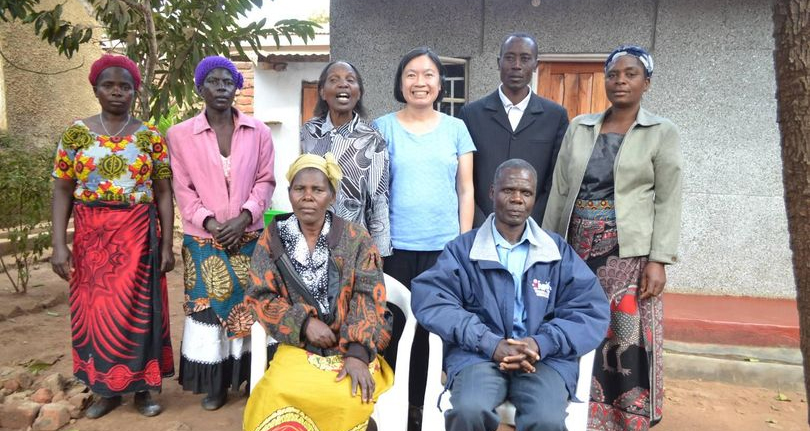
In Malawi through the years, she has facilitated student and resident rotations at Kamuzu Central Hospital. In 2011, working with a Malawi nurse, she also helped to establish a peer support network to help patients with diabetes, hypertension and other non-communicable diseases. Part of her work there is bringing the clinic equipment that is in short supply, such as blood-pressure cuffs and glucometers. “That is probably my most rewarding experience,” she says. “Prevention is what helps people take care of themselves.
“The thing that drives me, beyond my background, I’m always so inspired by the people I have met along the way,” she adds. “When you work in a very low-resource setting, it is the people that are the best resources. If you can empower them to do the work they want to do ... that work is most nourishing to me.”
Marty Levine is a staff writer for the University Times. Reach him at martyl@pitt.edu or 412-758-4859.
Have a story idea or news to share? Share it with the University Times.