
By MARTY LEVINE
The deli as a place for “comfort and community” is the theme behind an Oct. 9 campus talk by Ted Merwin, author of the new book, “Pastrami on Rye: An Overstuffed History of the Jewish Deli,” says Rachel Kranson, director of Jewish Studies.
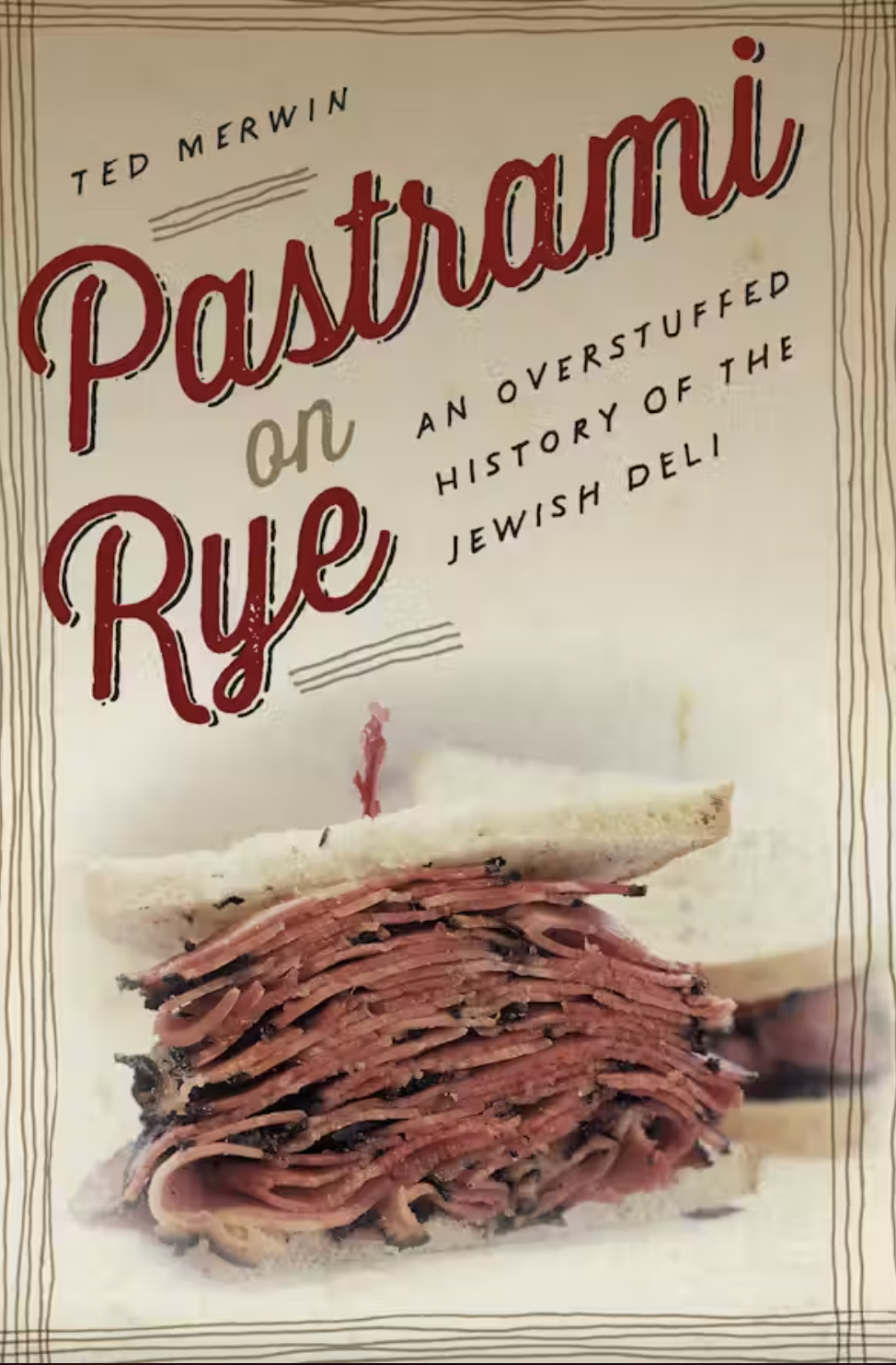 “I expect him to talk about how for many Jews, a visit to the deli can be almost a religious experience, a way to experience the comfort of a familiar Jewish environment and express Jewish identity,” Kranson explains. “Some people find that in synagogue, but the deli is — and has been — another place where Jews can lean in to those feelings….”
Two Jewish Studies faculty this semester are teaching food-related courses: Frayda Cohen is presenting “Feeding the Soul” about food, gender and religion, while Hilla Nehushtan offers a class on the anthropology of food.
“We all liked the idea of bringing in a scholar with expertise in Jewish food history to offer insight into the deli, which is such an iconic institution for Ashkenazic American Jews,” Kranson says.
Indeed, Merwin’s book is being advertised as focusing on “the New York Jewish deli (as) an iconic institution in both Jewish and American life. … Today, after a long period languishing in the trenches of the hopelessly old-fashioned, it is experiencing a nostalgic resurgence.”
Kranson says Merwin will be talking about such spots in many American cities, not just New York, although she’s unsure whether he will touching on local restaurants — from Richest’s to Weinstein’s to Rhoda’s/Kazansky’s.
Merwin will speak from 5:30 to 7:30 p.m. Oct 9 in Room 501 of the Cathedral of Learning.
She is a vegetarian today, but says, “I still cherish my memories of chicken soup with matzo balls. As a child, my go-to order was soup and a tongue sandwich … until I discovered that ‘tongue’ was cut from an actual pickled tongue and that wasn’t just a name for the type of meat, like ‘pastrami.’ After that, I ordered corned beef or pastrami.
“Now my deli favorites are potato knishes, half-sour pickles and the vegetarian soups: mushroom barley or split pea,” she says, adding emphatically: “Dill pickles are not a thing. They are fully sour or half sour.
“I would be thrilled if attendees thought seriously about the importance of food culture,” Kranson adds. “Food brings up so many emotions for people, positive and negative. In this talk, during such a painful time around the world, I hope attendees take a moment to reflect on some of the positive emotions that food can elicit: community, belonging, excitement, pride, even ecstasy.”
In her message announcing the event, Kranson acknowledged that “the beginning of this academic year has been fraught with challenges, including ongoing violence in the Middle East and a horrifying attack on Jewish students right here on our Oakland campus.”
Asked how the past year had changed her program, she responded: “Obviously, the ongoing bloodshed in the Middle East on and after October 7 has been preoccupying many of us at the University, not only in Jewish studies. It has been an incredibly painful year for those of us in the field of Jewish studies, and in many ways a time of deep reckoning about what it is we do as scholars. This soul searching is necessary and important, and many of our courses and upcoming events deal with the hard questions.”
However, she added, “Jewish studies is not only about conflict, violence or antisemitism, and it would be a disservice to the richness of our field to reduce it to those difficult topics. This is one of the reasons why we are so excited to be welcoming Dr. Merwin this semester.”
Marty Levine is a staff writer for the University Times. Reach him at martyl@pitt.edu or 412-758-4859.
Have a story idea or news to share? Share it with the University Times.